Whether you talk to a customer service bot, receive product recommendations on websites, or use a map app, you are working with intelligent systems. These systems are known as AI agents.
In this guide, you will know about what an AI agent is, how AI agents work, types of AI agents, and the use cases of AI agents. It will be explained in a simple manner so that you will be able to use this information practically.
What is an AI Agent?
First of all, we will try to solve the most frequently asked question: What is an AI agent?
An AI agent is a system that can sense its surroundings and take actions to complete its goals. It works without constant human control.
It’s like a clever assistant that can make decisions based on its observations and learning. It is not a system that will blindly follow orders step by step.
For example, when you ask a question to a chatbot, it reads the question, understands the meaning, and provides a proper answer. All these tasks are performed by an AI agent.
This is the basic concept of sensing, thinking, and acting.
How Does An AI Agent Work?
To understand this more clearly, try to consider how a person would act in a similar situation.
- A person sees what is going on
- A person thinks about what to do
- A person acts
An AI agent follows the same basic process.
1. Perception (Input)
The agent receives information from its surroundings. The information could be textual, visual, auditory, or numerical in nature.
Example:
The chatbot interprets the user’s message.
2. Decision Making

Based on the input, the system uses predefined rules/patterns to make a decision.
Example:
The chatbot recognizes the question and provides the best answer to it.
3. Action (Output)
An action is performed by the agent based on the decision made above.
Example:
The chatbot replies to the user.
4. Learning (Optional but Powerful)
Some agents gain experience through learning from their past experiences.
Example:
The recommendation engine grows better at its job based on user activity monitoring. The pattern continues to repeat, ensuring that the agent can react to changing conditions.
What are the Main Components of an AI Agent?
Typically, an AI agent has four main components.
-
Environment
This refers to the place where the agent will perform its actions. This could be websites, a mobile application, or even the real-world environment.
-
Sensors
Sensors help the agent gather information. In computing environments, sensors could include input mechanisms, APIs, and data feeds.
-
Actuators
These are the mechanisms that the agent uses to perform certain actions. This includes sending messages, displaying recommendations, and performing certain tasks.
-
Decision System (Brain)
This component is responsible for making all decisions and includes simple rules, decision trees, and Machine learning algorithms. The AI agent performs a constant feedback cycle from input to decision to action.
Types of AI Agents
There are various kinds of agents in AI, and each differs in functioning due to differences in their complexities and usage. This will give you an idea of how AI systems develop from simple rule-following tools to complex decision-making processes.
Simple Reflex Agents
The most basic form of an agent is the reflex agent. This agent acts according to the current inputs and applies the rules already made. It does not have any memory of past experiences.
One example of such an agent is a very basic anti-spam email filtering program that filters out messages according to fixed rules every time.
Model-Based Agents
An advanced form of this is the model-based agent. Such agents maintain records of their past experiences and have requisite knowledge about how the environment changes.
The GPS navigation system, which updates the route according to changing traffic, is an excellent example of this type of agent.
Goal-Based Agents
Source Image:- clevertap.com
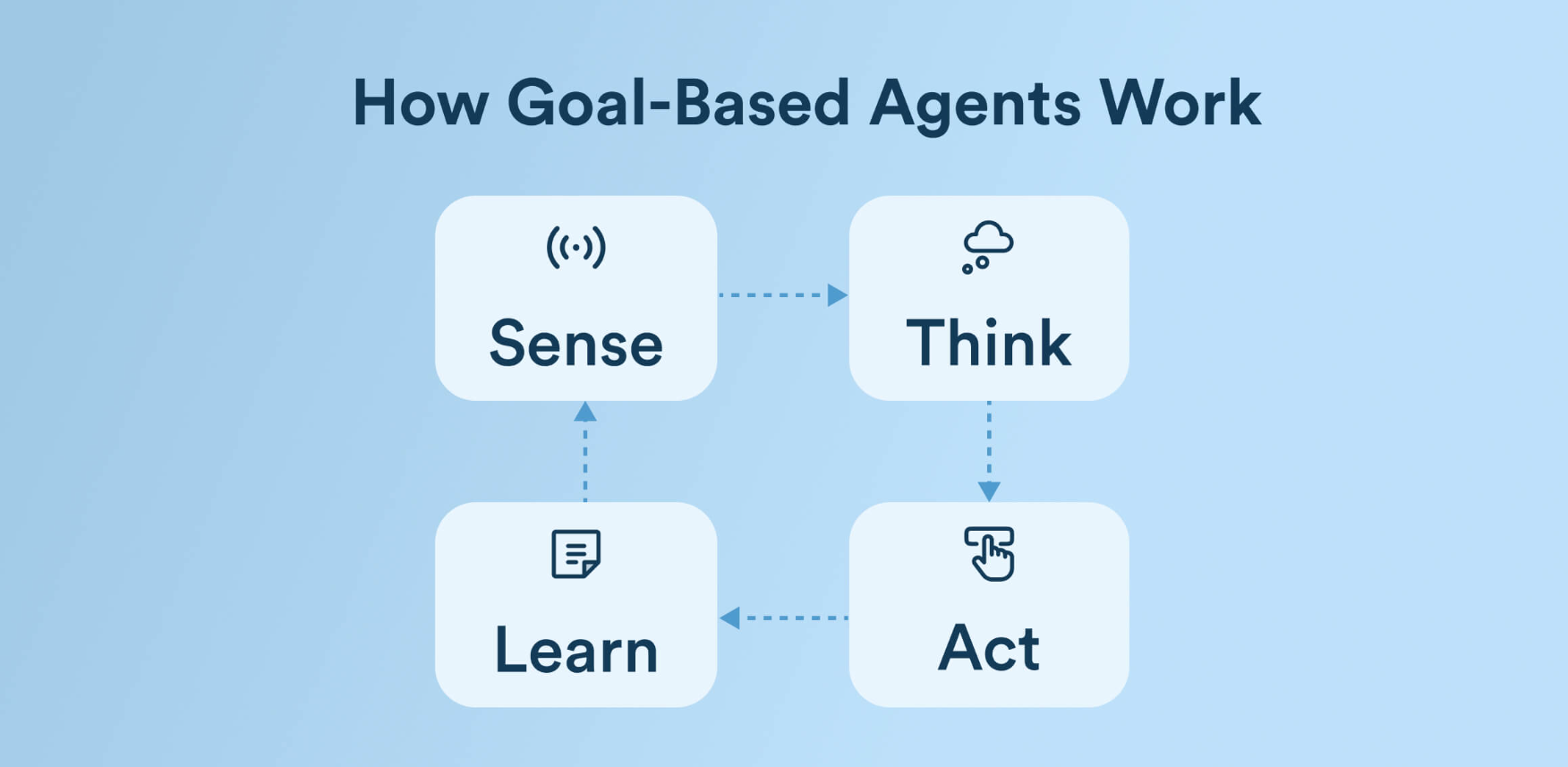
Next, we have goal-based agents. These agents are designed to achieve some desired result. They consider various options and pick the right one, which can help them execute their objective.
A planning algorithm for a delivery route that picks the shortest or fastest route would be a simple example of such an agent.
Utility-Based Agents
Utility-based agents take things to a higher level. While other agents aim to achieve a goal, utility-based agents aim to reach the best outcome. They analyze various options and choose the most valuable.
Travel agents mostly use such an approach when recommending flights and hotels based on aspects like cost, time, and comfort.
Learning Agents
The final type of agent is that of the learning agent. Such agents get better at their tasks due to the learning process. They are not entirely dependent on rules because they learn from experience.
Recommendation engines on streaming or retail websites come under this, as you use them more, the more accurate they get.
Different Types of AI Agents (Quick Comparison)
Here’s a simple way to understand the differences.
|
Type |
Memory | Learning | Complexity |
| Simple Reflex | No | No | Low |
| Model-Based | Yes | No | Medium |
| Goal-Based | Yes | Limited | Medium |
| Utility-Based | Yes | Limited | High |
| Learning Agent | Yes | Yes | Very High |
Use Cases for AI Agents
AI agents are used in various sectors for their automation capabilities and to improve decision-making, which makes them totally valuable.
1. Customer Support
Virtual agents deal with customers’ queries, decrease waiting times, and enhance user experience.
Examples are answering FAQs and resolving basic issues.
2. E-commerce Recommendations
Source Image:- webkul.com
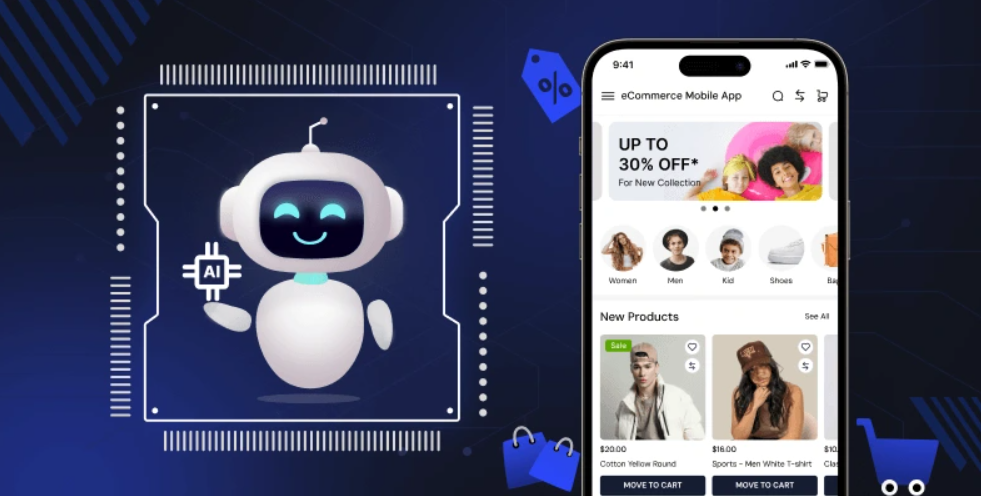
These online stores use AI agents to suggest products according to consumers’ activities.
For Example: “You may also like” suggestions and personalized offers.
3. Healthcare Assistance
These AI agents provide assistance to patients, manage the data, and help doctors.
Examples are appointment booking services and symptom diagnostic tools.
4. Finances and Banking
These agents are used to detect any fraud and manage financial matters.
Examples are anti-fraud software solutions and spending management applications.
5. Marketing Automation
These AI agents help in targeting an appropriate audience for marketing purposes.
Examples are email campaigns and ads targeting.
6. Smart Devices
Voice recognition, home automation, and AI agents are part of our daily routine.
Examples are voice-controlled devices and smart thermostats.
7. Navigation and Travel
Navigation is made easy and efficient with the help of AI agents.
Examples are traffic prediction and route planning.
Advantages of AI Agents
AI agents offer several benefits when deployed appropriately.
Save Time
They perform repetitive tasks faster that makes people focus on more important tasks.
Increase Accuracy
Source Image:- prakashinfotech.com
They minimize human errors when managing large amounts of data.
Work Continuously
Unlike humans, AI agents can work for a long time without rest.
Boost User Experience
They offer convenient and personalized interactions.
Disadvantages of AI Agents
AI agents have many advantages, but they also have some drawbacks.
-
Lack of Deep Understanding
Some AI agents lack adequate knowledge to understand certain information.
-
Dependence on Data
AI agents depend entirely on data. They will produce low-quality output if there is insufficient data.
-
Privacy Issues
The collection of user data requires effective privacy policies.
-
High Implementation Costs
Developing advanced AI agents is relatively costly.
Future of AI Agents
AI agents will become more common and advanced.
In the future, we will observe improved personal digital assistants, decision support systems, the best application for small businesses, and advanced automation software.
AI agents will never replace humans. They will assist them in their work.
Wrapping It Up
Understanding what is an AI agent is important. They are developed to sense, reason, and behave in a manner that enables them to meet certain objectives.
There are different types of AI agents for different purposes from rule-based AI agents to learning AI agents. There are many applications of these types of agents across different areas, such as healthcare, finance, and e-commerce.
As technology improves, there will be more applications of AI agents within organizations and how individuals interact with technology.